
OSSERVANDO SONORITA’ CROMATICHE SULL’ARTE DI SHUHEI MATSUYAMA
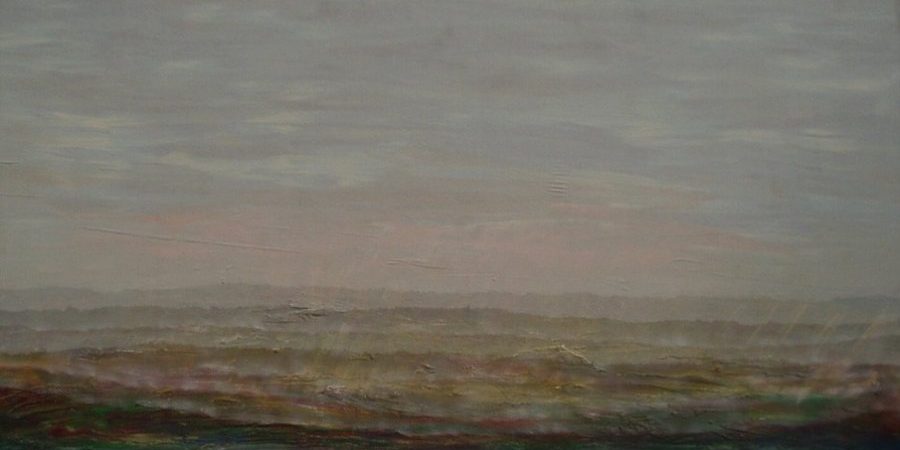
Una luce cresce leggera e impalpabile sull’orizzonte, un bagliore indistinto trapela dal velo increspato della superficie, un suono prolungato nasce dalle vibrazioni della materia: ecco il mondo creativo di Shuhei Matsuyama che si rivela attraverso le opere di questa mostra, pensata come luogo di congiunzione tra il reale e l’immaginario, tra gli sconfinamenti del paesaggio e le misure dello spazio interiore.
Ogni mostra di Matsuyama è infatti costruita sulla lunghezza d’onda del corpo e del pensiero che, insieme, toccano le estremità del visibile e le profondità sconosciute dell’invisibile, sollecitando nell’osservatore uno stato di serenità che coincide con la sospensione del suono sul colore.
Si tratta di un suono che il pittore ricava dalle tracce della materia, che sollecita nella lenta trasformazione dell’immagine, come essenza allusiva del colore che si ascolta in silenzio, nell’immobilità del tempo.
Nell’arte di Matsuyama il silenzio della pittura è carico di suoni interiori, è fisicità che non si stacca mai dal corpo del colore, lo insegue infinitamente come pura estensione del sé. È dilatazione sensoriale del soggetto che annulla ogni distanza nell’atto di guardare lo spazio.
L’aspirazione dell’artista è quella di cogliere la verità spirituale dell’immagine sognando l’opera come una zona di luce che contiene tutti i suoni e tutti i colori che sono stati prima e saranno poi, al di fuori di condizioni che non siano riferibili all’amore per la pittura e per la musica. Queste due discipline interagiscono pur mantenendo separati i loro caratteri specifici, sarebbe illusorio credere a una loro perfetta coincidenza, tuttavia ciò non impedisce di cogliere le complesse sintonie che nascono tra la natura del colore e quella del suono.
Viene in mente una considerazione di Goethe che recita in questo modo: «Come due fiumi che derivano da uno stesso monte, ma che sotto affatto diverse condizioni scorrono in due luoghi del tutto opposti nel mondo, così che nessun luogo singolo può, sui pieni corsi di ambo le parti, venir assottigliato con l’altro, così anche sono colore e suono.»
Il rapporto si pone dunque sul piano di una comune origine che esprime differenti percorsi all’interno di una unità fisica e simbolica che è quella stessa della vita e della natura, rispetto alle quali l’opera è il luogo misterioso dove le sensazioni visive e acustiche stanno sullo stesso filo.
Colore e suono, tuttavia, non sono soltanto linguaggi affini ma soprattutto modi di sentire l’esperienza dell’arte come libertà immaginativa, ricerca dell’inesprimibile, acuta tensione percettiva che supera ogni conflitto con la realtà per entrare in armonia con il mondo. La visione della luce è simile a un grembo infinito in cui l’artista giapponese sprofonda come in un’oscurità splendente dove il colore filtra le sonorità del mondo e le assimila nel processo di stratificazione della materia, nella purificazione dei suoi elementi espressivi.
Nelle opere dei primi anni Novanta domina un fluido effetto di luce dovuto all’uso di carte trasparenti che creano andamenti sinuosi e avvolgenti, così che dalle increspature si sprigiona un vento di leggerezza.
Nel corso di quel decennio altre apparizioni prendono corpo sulla superficie insistendo sull’ossessione della linea di orizzonte, ora ben marcata nella materia ora semplicemente allusiva, con un senso di fugace presenza nel vuoto che conferisce allo spazio un valore transitorio.
In effetti, lungo il segno che scava l’orizzonte esaltando la funzione simbolica della linea può essere individuato il percorso variabile del suono che cresce discreto nei luoghi del paesaggio, nel movimento fluttuante dell’acqua, tra le vibrazioni impercettibili dell’aria oppure sulla soglia appena dischiusa delle labbra. In queste opere, concentrate nel percorso di un filo che attraversa il vuoto per ricavarne misteriosi tragitti, si allude sempre ad un altrove, a qualcosa che si pone oltre il visibile, in un diverso rapporto con il mondo rappresentabile.
Matsuyama parla anche del colore come “grido del cuore” e questa immagine poetica indica una tensione spirituale che rappresenta il fondamento della ricerca pittorica contemporanea di segno astratto, è il tramite sottile e persistente che permette al “pittore non figurativo” di cancellare la rappresentazione del reale per essere in sintonia con la parte più segreta di se stesso.
In tal senso, le origini dell’artista giapponese, per quanto si siano modificate attraverso i più significativi esempi della pittura europea e americana (da
Turner a Monet, da Klee a Kandinskij, da Newman a Rothko), mantengono inalterate le tracce essenziali dello spazio orientale, quel processo fisiologico del divenire che fa della pittura un esercizio spirituale che non ha limiti, che si fonda non tanto sull’illusione visiva ma su ciò che un’immagine è per quello che è.
L’artista non ha mai bisogno di rappresentare qualcosa di preciso, può partire dall’assenza di punti di riferimento per giungere ad esprimersi attraverso gli impulsi del segno che precedono qualsiasi tentativo di organizzare razionalmente la visione della natura.
Nasce così la necessità di leggere le opere di questa mostra come visioni apparentemente separate di un paesaggio totale di cui si colgono molteplici bagliori, frammenti e affinità di ritmi che crescono nell’infinita gamma dei colori: blu, rosso, ocra, verde. Senza dimenticare la funzione decisiva dei valori luminosi del bianco e del nero, il loro reciproco incontro, persino i leggeri contrasti che trapelano in ogni punto delle atmosfere inconfondibili di Matsuyama.
La serie degli Shin-on (i suoni) è attraversata da stati d’animo legati alla frontalità dello sguardo, a flussi di pensieri e di emozioni che sono possibili grazie alla forza di concentrazione del colore che non si blocca in se stesso ma si irradia nell’intensità dello spazio.
L’esperienza del suono rende ancor più acuta la meditazione intorno al valore assoluto dell’immagine, permette di cogliere le relazioni tra la fisiologia del pittore e il respiro del colore, vale a dire tra l’esercizio cosciente del dipingere e la crescita irrazionale delle forme pittoriche.
Se si osservano le opere dell’ultimo periodo si avverte che la dimensione del vuoto, intimamente connessa all’arte di Matsuyama fin dall’inizio del suo lavoro, assume altre consistenze creando rapporti imprevedibili tra il senso della trasparenza e quello della materia, tra la luminosità impalpabile dei veli carta e l’accentuazione materica della superficie.
Questo scarto avviene soprattutto negli Shin-on più carichi di valori tattili e di spessori cromatici, come è evidente in alcuni esempi del 1997 (97055 e 97056), o in altri dipinti del 2000 (00035 e 001 79), fino ad alcune opere del 2001 come Venezia o Nascita di vino e divino.
Da un lato, l’artista lavora sulla memoria visionaria del paesaggio come luce che scaturisce dalle vibrazioni dell’acqua e, dall’altro, inventa un gioco di parole dove l’ironia non attenua la tensione pittorica ma pone in evidenza l’alchimia del processo cromatico.
Nella maggior parte di questi dipinti prevale il carattere lirico del paesaggio che rafforza la sua visibilità attraverso il senso atmosferico del colore, sospeso tra terra e cielo, tra vegetazioni che crescono sotto l’orizzonte e strisce di nuvole che lo sovrastano.
In questi casi Matsuyama abbandona i vapori luminosi dei toni monocromatici e lascia emergere l’immediatezza del colore, la stratificazione dei pigmenti e il valore dinamico delle pennellate.
Quando la pittura si confronta con l’architettura e la ricerca si sposta sul piano delle installazioni, l’artista si affida a colonne dipinte con leggerezza, quasi senza peso, impalpabili, fino a smaterializzarsi nella luce dell’ambiente. La colonna è un modulo spaziale variabile che attraverso diverse altezze permette di creare ritmi simultanei in grado di trasformare lo spazio statico in percorso di eventi dinamici, con la possibilità di creare un nuovo sentimento del luogo espositivo.
Il rapporto che si stabilisce tra l’insieme delle colonne e il corpo dello spettatore non esclude la presenza del suono come sollecitazione non solo del colore ma anche del movimento di chi guarda, con riguardo nei confronti del pubblico che deve essere in grado di avvertire il senso di reciproca necessità tra aspetto visivo e dimensione acustica.
In questo genere di installazioni Matsuyama si sente fortemente impegnato nel definire un progetto estetico, una filosofia dello spazio, dove la pittura rimane al centro di ogni possibile estensione, in quanto il colore, ancor prima di esprimere un pensiero musicale, trasmette energie sensoriali che trasformano la percezione dello spazio agibile.
In questo corpo a corpo con l’ambiente, l’artista mette in atto un tipo di sperimentazione che supera la dimensione interiore della pittura, si tratta infatti di una strategia totalizzante che utilizza le singole opere come strumenti per sollecitare un rapporto sinestetico che prevede contemporaneamente l’azione del senso visivo, della suggestione tattile e dell’evocazione sonora.
Muovendosi in questa direzione, la pittura diventa non solo un esercizio per disciplinare l’immaginazione ma un sistema in continua mutazione con movimenti percettivi che avvengono sia all’interno delle superfici dipinte sia negli intervalli tra una superficie e l’altra, in una stretta dialettica tra i pieni e i vuoti.
Ciò che apparentemente può essere definito “vuoto” assume un peso visivo e sonoro che è difficile programmare in quanto la posizione dei colori e la disposizione dei suoni è sempre soggetta alla diversa capacità di percezione del pubblico. Ciò che conta, per Matsuyama, non è stabilire un codice di comportamento ma suggerire il fatto che le immagini e i suoni parlano di tempo e di spazio in un rapporto che stimola un costante desiderio di conoscenza del mondo e di svelamento —della sua sfera segreta.
Del resto, a chi lo spinge ad interrogarsi intorno al senso del dipingere Matsuyama non risponde forse che esso sta nella ricerca di libertà e di gioia di vivere?
Che sia la pittura, nell’attuale società dominata dallo strapotere della comunicazione, a continuare ad assumersi questo difficile e necessario ruolo mi pare sotto gli occhi di tutti.
Che sia, inoltre, la funzione poetica dell’arte, ben diversa dalle aride applicazioni tecnologiche delle recenti tendenze artistiche, a indicare l’identità ancora possibile del “fare pittura” mi sembra confermato dalla qualità e dalla sensibilità di pittori come Matsuyama. Soprattutto, dall’amore che egli porta verso l’immagine della pura sensibilità, verso la sintesi del pensiero immaginativo che nasce dalla straordinaria coesione di colori e di suoni, per mezzo dei quali l’artista giapponese non si stacca neppure per un attimo dalla luce interiore della sua arte.
di Claudio Cerritelli
OBSERVING SOUNDS CHROMATIC ON THE ART OF SHUHEI MATSUYAMA
A light grows light and impalpable on the horizon, a faint glow leaked from the veil rippled surface, a prolonged sound comes from the vibration of the matter here is the creative world of Shuhei Matsuyama revealed through the works in this exhibition, conceived as a place of between the real and the imaginary, between the crossovers of the landscape and the measures of the interior space.
Each show Matsuyama is in fact built on the wavelength of the body and mind which, together, touch the ends of the visible and the invisible unknown depths, urging the observer a state of serenity, which coincides with the suspension of the sound color.
It is a sound that the artist derives from the traces of matter, which calls for the slow transformation of the image, as allusive essence of the color you listen in silence, in the stillness of time.
Matsuyama in the art of the silence of the painting is full of internal sounds is physicality that never leaves the body color, pursues him endlessly as a pure extension of the self. You sensory dilatation of the person who cancels any distance in the act of looking at space.
The aspiration of the artist is to capture the spiritual truth of the image dreaming the work as an area of light that contains all sounds and all the colors that have been before and will then, outside of conditions that are not referable to love for painting and for music. These two disciplines interact while maintaining separate their specific characters, it would be illusory to believe their perfect coincidence, but this does not prevent you understand the complex harmonies that arise from the nature of color and that of sound.
One is reminded of a consideration of Goethe which reads as follows: “As two rivers that derive from the same mountain, but under quite different conditions run in two places in the world quite the opposite, so that no single site can, on full courses on both sides, be thinned with each other, so too are color and sound. ”
The report therefore raises the level of a common origin which expresses different paths within a unit which is the physical and symbolic of life itself and nature, for which the work is the mysterious place where visual and auditory sensations are on the same wire.
Color and sound, however, are not only kindred languages but also ways to feel the experience of art as imaginative freedom, research inexpressible, acute stress perception that exceeds any conflict with reality to be in harmony with the world. The vision of light èsimile an infinite womb in which the Japanese artist sinks like a shining darkness where color filters the sounds of the world and assimilates in the process of stratification of matter, in the purification of its expressive elements.
In the works of the early nineties dominates a fluid light effect due to the use of transparent paper that create sinuous and wrapping, so that ripples emanating from a light wind.
During that decade other appearances take shape on the surface insisting obsession of the line of the horizon, now well marked in the field now merely allusive, with a sense of fleeting presence in the void that gives the space a transitional value.
In fact, the sign that digs along the horizon enhancing the symbolic function of the line can be identified the variable path of the sound that grows in discrete places in the landscape, the fluctuating movement of water between the imperceptible vibrations of the air or on the threshold just-open lips. In these works, concentrated in the path of a thread running through the vacuum to obtain mysterious journeys, always alluded to elsewhere, something that arises beyond the visible, in a different relationship with the world represented.
Matsuyama also speaks of color as a “cry of the heart” and this indicates a poetic spiritual tension that is the foundation of pictorial research of contemporary abstract sign, it is through subtle and persistent that allows the “non-figurative painter” to remove the representation of real to be in harmony with the most secret part of himself.
In this sense, the origins of the Japanese, as they are modified through the most significant examples of European and American painting (from Turner to Monet, Klee, Kandinsky, Rothko by Newman), maintain unchanged the essential trace space Eastern Europe, the physiological process of becoming that makes painting a spiritual exercise that has no limits, which is based not so much on the illusion of visual but what a picture is what it is. The artist never need to represent anything in particular, as can the lack of reference points to reach to express themselves through the impulses of the sign prior to any attempt to rationally organize the view of nature.
Hence, the need to read the works in this exhibition as visions of a landscape seemingly separate total of which capture multiple flashes, fragments and affinity rhythms that grow in the infinite range of colors: blue, red, ocher, green. Not to mention the critical role of values brighter than white and black, their mutual encounter, even the slight differences that leaked at every point of the unmistakable atmosphere of Matsuyama.
The series of Shin-on (sounds) is crossed by moods associated with frontal gaze, a flow of thoughts and emotions that are possible through the power of concentration of the color that it locks itself, but radiates in the intensity of the space.
The experience of the sound makes it even more acute meditation around to the absolute value of the image, allows us to understand the relationship between the physiology of the painter and the breath of color, that is, between the conscious exercise of painting and growth irrational pictorial forms.
If you look at the works of the last period is felt that the size of the void, intimately connected to the art of Matsuyama from the beginning of his work, takes other textures creating unpredictable relationships between the sense of transparency and that of matter, including the brightness impalpable veils paper and the accentuation of the surface material.
This difference is primarily in the Shin-on plus loads of tactile values and thicknesses color, as is evident in some examples of 1997 (97055 and 97056), or in other paintings of 2000 (00 035 and 79 001), up to some works of 2001 as Venice or Birth of wine and divine.
On the one hand, the artist works on the memory of the visionary landscape as the light that comes from the vibration of the water and, second, invents a word game where irony does not attenuate the voltage but pictorial highlights the alchemy of process color.
In most of these paintings prevails the lyrical character of the landscape that reinforces its visibility through the atmospheric sense of color, suspended between earth and sky, between vegetation growing below the horizon and streaks of clouds above it.
In these cases, Matsuyama leaves the vapors of bright monochromatic tones and leaves emerge the immediacy of color, layering of pigments and the dynamic value of the stroke.
When the painting is compared with the architecture and the search moves to the floor of the installations, the artist relies on columns painted with light, almost weightless, ethereal, to dematerialize the light environment. The column is a variable space module that through different heights allows to create rhythms simultaneous able to transform static space in the path of dynamic events, with the possibility of creating a new feeling of exhibition place.
The relationship established between all the columns and the body of the viewer does not exclude the presence of sound as stress not only the color but also the movement of the beholder, with regard to the public to be able to warn the sense of mutual need between visual appearance and acoustic dimension.
In this kind of installations Matsuyama feels strongly committed to define an aesthetic project, a philosophy of space, where the painting remains at the center of every possible extension, as the color, even before expressing a musical thought, transmits energies that transform sensory the perception of space accessible.
In this melee with the environment, the artist enacts a type of testing that exceeds the size of the inner painting, it is in fact an all-encompassing strategy that uses the individual works as a means to solicit a synaesthetic relationship that involves simultaneously the action of the visual sense, suggestion and tactile evocation of sound.
Moving in this direction, the painting becomes not just an exercise to regulate the imagination but a constantly changing perceptual movements that take place both inside the painted surfaces and in the intervals between the surface and the other in a close dialectic between full and empty.
What apparently can be defined as “empty” assumes a weight visual and sound that is difficult to program since the position of the colors and the arrangement of sounds is always subject to the different capacity of the public perception. What matters, Matsuyama, is not to establish a code of conduct but to suggest that the images and sounds speak of time and space in a relationship that stimulates a constant desire for knowledge of the world and of revelation-his secret sphere.
For the rest, who raises questions about the meaning of the painting does not respond Matsuyama mean that it is in search of freedom and joy of life?
Whether it’s painting, in a society dominated by the overwhelming power of communication, to continue to take on this difficult and necessary role seems to me under the eyes of all.
It is also the poetic function of art, a far cry from the arid technological applications of recent artistic trends, indicating the identity of the still possible “to paint” appears to be confirmed by the quality and sensitivity of painters such as Matsuyama. Above all, the love that he brings to the image of pure sensibility towards the synthesis of imaginative thinking that comes from the extraordinary cohesion of colors and sounds, by means of which the Japanese artist does not come off even for a moment by the light interior of his art.
by Claudio Cerritelli