
SHUHEI MATSUYAMA
Tra coloro che a un certo punto della loro vita hanno abbandonato la patria di origine e si sono trasferiti in un’altra parte del mondo, in una terra molto distante dalla loro non soltanto in termini di spazio ma anche per ciò che riguarda la cultura, le concezioni estetiche, i modi di vita e di pensiero, c’è anche Shuhei Matsuyama. L’impronta di una civiltà che ha conservato per secoli intatte le proprie caratteristiche, aprendosi definitivamente all’Occidente soltanto verso la fine del XIX secolo e rinsaldando i suoi legami con il nostro mondo specialmente dopo la seconda guerra mondiale, non gli ha certamente impedito di acquisire con il passare degli anni anche una conoscenza approfondita delle abitudini, dei modi di vita e delle tradizioni culturali locali. La proficua ricerca spirituale e artistica iniziata nel suo paese d’origine all’insegna della filosofia Zen, è proseguita per lui in Occidente in modi che rivelano una nuova consapevolezza espressiva all’insegna dei valori occidentali pur nella piena, armoniosa consonanza del pittore con il mondo della natura, che rappresenta il fulcro di tutta l’arte orientale.
Più della religione, che pure ha avuto la sua parte, hanno influito infatti sull’arte orientale determinati caratteri della filosofia Zen, come lo spirito di contemplazione, la ricerca della pace interiore, la tensione verso una suprema armonia nel pieno rispetto delle leggi naturali. Con il suo universo di forme, linee, colori l’arte giapponese appare volta a celebrare soprattutto le bellezze della natura in modo immediato, senza il filtro condizionante della religione, com’era successo per secoli in Occidente. Oltre a quello legato al pensiero filosofico, alla natura e alla religione vi è poi, tra i diversi livelli di lettura propri dell’arte giapponese, anche quello legato alle emozioni interiori, alla sfera più intima dell’uomo. E le vie per esprimere le vibrazioni dell’energia interiore possono essere veramente molteplici.
Matsuyama tende a trasferire direttamente sulla tela l’esperienza emotiva e a “modellarla” per mezzo della linea, del colore, della luce, senza troppi mascheramenti illusionistici o richiami simbolistici, a testimonianza di uno sforzo teso a liberare la pittura dagli impedimenti del ricordo, dell’associazione, del mito e di quanto costituisce la zavorra della pittura occidentale. Egli cerca di stabilire un contatto immediato con il mistero dell’uomo, della natura, della vita, della creazione.
La severità e l’asciuttezza espressiva dell’arte giapponese rivivono in modo veramente moderno e attuale nelle opere di Matsuyama. Nelle sue tele traspare il mistero del dramma che coinvolge la nostra esistenza: la lotta tra la luce e le tenebre, tra l’energia positiva e quella negativa, tra il bene e il male. Egli appare in grado di superare ogni ostacolo di tipo mimetico-illusionistico destinato a impedire allo spettatore la visione dell’idea che guida il pittore-demiurgo nella (ri)composizione della realtà entro i limiti imposti dalla superficie pittorica.
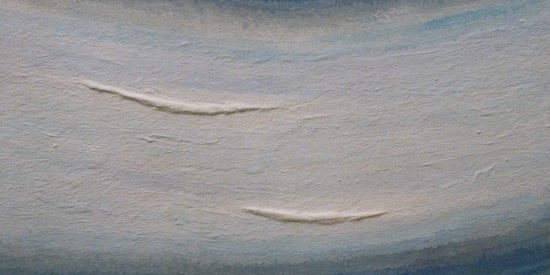
Tutto ciò tende soprattutto alla rivalutazione dei valori intuitivi, spirituali, metafisici, svincolando l’artista dalla necessità del disegno, della troppo precisa distinzione delle forme e perfino della troppo grande varietà cromatica per una rappresentazione efficace e assoluta della verità spirituale. Rimangono soltanto dei campi di colore più o meno materico, intenso, omogeneo, sfumato che esprimono la transitorietà e la mutevolezza della realtà attraverso variazioni luminose. Il paesaggio, che in alcune composizioni riusciamo a malapena a percepire e in altri vediamo formarsi in modo abbastanza distinto sotto i nostri occhi, rappresenta forse soltanto un incidente, una combinazione fortuita di stesure cromatiche, di variazioni luminose che danno alla superficie pittorica la parvenza di un dipinto appartenente all’area espressiva della pittura moderna occidentale.
di Josko Vetrih (prevod v slov.: Vili Princic)
SHUHEI MATSUYAMA
Among those who at some point in their life have left their country of origin and moved to another part of the world, in a land far away from theirs, not only in space but also as culture, the aesthetic concepts, the ways of life and thoughts, there is also Shuhei Matsuyama. The mark of a civilization that for centuries has preserved intact its characteristics, finally opening to the West only in the late nineteenth century and reinforcing the links with our world, especially after the Second World War, has certainly not prevented from acquire, over the years, including a thorough knowledge of the habits, ways of life and cultural traditions. The fruitful spiritual and artistic research began in his native country under the banner of Zen philosophy, continued for him in the West in ways that reveal a new awareness of expression in the name of Western values while in full, harmonious consonance with the painter world of nature, which is at the base of all oriental art.
More than religion, which also had its part, certain characters of the Eastern Zen philosophy in fact have influenced art, as the spirit of contemplation, the search for inner peace, the quest for a supreme harmony in full compliance with the laws of nature. With its universe of shapes, lines, colors, the Japanese art is especially dedicated to celebrating the beauty of nature in a direct way, without the filter conditioning of religion, as had happened for centuries in the West. In addition to the philosophy, nature and religion, there are also, among the various levels of reading the Japanese art, the inner feelings, the most intimate sphere of man. And the ways to express your inner energy vibrations may be too great.
Matsuyama tends to transfer directly onto the canvas emotional experience and “shape it” by through line, color, light, without too many illusions or symbolism, reflecting the effort to set painting free from the impediments of memory, of association, of myth and of the weight of Western painting. He tries to establish immediate contact with the mystery of man, nature, life, and creation.
The Japanese art’s severity and expressive dryness come to life in truly modern and contemporary works of Matsuyama. In his paintings it’s reflected the mystery of the drama, including our existence: the struggle between light and darkness, between the positive and negative energy, between good and evil. He is able to overcome any obstacle type-mimetic illusionistic intended to prevent the viewer from the vision of the idea that guides the artist-demiurge in the (re)composition of reality within the limits of the pictorial surface.
All this is meant mainly to the reevaluation of the institutive, spiritual, metaphysical values, which free the artist from the necessity of drawing, from too precise distinction of forms and from the great variety of colors, for effective representation and absolute spiritual truth. There remain only the color fields more or less material, intense, homogeneous, gradient, that express the transience and mutability of reality through light variations. The landscape, in some compositions can hardly perceive and see other form fairly distinct in our eyes, is probably only an accident, a fortuitous combination of drafts of color, of light variations, that give to the appearance of the painted surface, a belonging to the expression of modern Western painting.
by Josko Vetrih (prevod v slov.: Vili Princic)