LA PITTURA COME TESTIMONIANZA DI CONOSCENZA
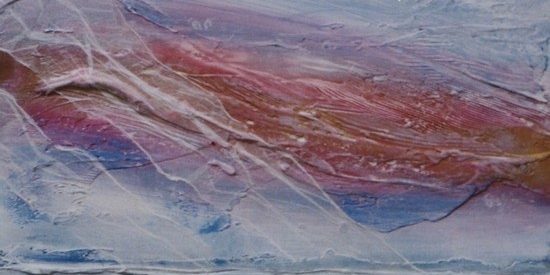
Nelle opere di Matsuyama si annunzia ogni volta una specie di resurrezione laidamente sacra: l’ordine superiore a cui la pittura sembra richiamarsi è suggerito da una ricerca che ha tratti di disperazione generale, simboli di un’epoca tragica. La ripetizione di alcune tematiche formali o l’accostamento di problemi o eventi testimoniano un ideale di pura ricerca: ogni opera è un affinamento logico, perfezionamento e avvicinamento ad una meta ideale: gli azzurri chiari, i grigi bianchi, la linea marrone di un orizzonte che è anche grido e ferita oppure gruppi di opere allineate in sequenza, tutti sono momenti di una ricerca lirica che la mente suggerisce come constatazione di una linea – vita disastrosa, che non vuole ricercare la purezza di Fontana, intenzionalmente, ma l’impurezza di eventi ugualmente sofferti sulla tela e nella vita. Un vissuto fatto di antichità e di contemporaneità. Ogni traccia è un fiume, un incanto che nasce dal nulla e al nulla ritorna, e crea attesa: in questo senso questa è un arte che torna a farsi segnale e simbolo: simbolo di angoscia vissuta, screpolature che giungono da paesi inesistenti e che invocano ritmi interni (che fanno parte del tempo) con simmetrie e strutture e abrasioni (che fanno parte dello spazio). La prospettiva non conta più: la profondità è quella del pensiero che crea e interpreta (e investe artista e lettore) e non quella dello spazio. Gli ON sono preannunziati dalla mente e il tipo di SHIN è un commento idealmente sonoro che segue l’interpretazione e la partecipazione. Io “entro nella tela e so farmi incantante” : la tonalità nasce con me.
L’artista giapponese si differenzia per ritmo, mistero, fascino, il suo spazio cambia il suo rapporto con l’uomo, il piano si incrina, apre prospettive diverse: la ferita inferta al foglio è un evento di materia che acquista un ruolo che lo porta a riflettersi e a replicarsi, la materia può farsi progetto, tecnica e bassorilievo, anche spazio e poesia. Lo spazio dipinto è esperienza totale: l’uomo è quello spazio, che comunica recuperando ciò che tenterebbe di rimanere fuori dallo spazio (pudore, violenza, dramma eterno dell’uomo). Sono la linea e lo squarcio che alimentano un piano che giungerà ai sensi tattili e visivi: il suono che ne nasce, accarezzando la tavola, è tutto fatto di silenzio. Su legno può nascere la musica delle proporzioni (diceva Longhi parlando delle tele di Piero della Francesca) e la forma può divenire musica e addirittura negare quello spazio occupandolo. Studiando le opere di Matsuyama vi accorgiamo che lo spazio del quattrocento è il suo hanno una prospettiva che è illusoria con un duplice significato: una pala d’altare o un taglio macerato raccontano una struttura che è comune, un identico fondale che è racconto di una constatazione, divina o no.
Lo spazio è quello donato dall’artista a chi guarda: i gesti si identificano con quelli di tutti i tempi: sarà il lettore a collocarli in un tempo storico. Il racconto grafico di Matsuyama consente di farsi leggere in un attimo, quasi simultaneamente al nascere su legno del segno grafico: come la discesa di una parola sulla pagina del poeta la pone fuori tempo nell’attimo in cui la intercala ad altre parole (come in Ungaretti il termine “cuore” quando si pone tra “ma nel” e “nessuna croce manca” oppure “pronto” s’interpone tra “così” e “di cuore” nel verso di Quasimodo) : un segno o una parola trovano il loro tempo quando si inseriscono nella struttura dell’insieme. Nel cubismo spazio e tempo s’identificarono nell’attimo del loro comporsi. L’attimo diventava l’opera, pronto a creare un continuum: uno spazio che si temporalizza e un tempo che si spazialisma. E’ il miracolo dell’artista giapponese che si spinge ad entrare nei meandri della sua finzione lirica: la trama del suo tessuto tende, sì, a farsi musica che è conoscenza di un disincanto comune, una musica fisicamente inascoltabile ma in verticale ascesa di purezza segnica e coloristica, uno stato d’animo nutrito di velature marine, di grumi culturali che chiamano a giudizio gli dei del momento in cui si pongono come testimoni della non felicità della vita. Incisioni, note, tratteggi fini come capelli, qua e là più o meno infittiti, grumi trasparenti nelle velature colorate, forse tutte carte da musica in attesa drammatica delle note.
L’artista giapponese è sempre, quando lavora, in attesa delle sue vibrazioni. L’arte in lui vive, e “non muore” come il Dio di Nietzsche. Persino la tradizione vera è per sua natura sempre contemporanea quando vi soffia dentro la filosofia di un’ epoca e a quell’epoca la si riporta. Nulla cambia dalle origini: paura e orrori rimangono vivi dentro, con nuove tecniche e materie che testimoniano il presente. L’esecuzione di un evento è un brano di storia esistenziale personale che si rende universale. Come accade al nostro Matsuyama quando ci conduce nel suo inferno e ci costringe a porci in questo contatto quando si avverte la purezza e l’inesorabilità del dipinto. Non concede vie di mezzo: o il rifiuto o la compartecipazione.
L’artista è sempre contemporaneo. Sono ormai cent’anni (dalle “Avanguardie storiche”) che le immagini hanno cessato di porsi come un riflesso della “realtà”: l’ordine incantevole di Matisse fu un messaggio estremo, poi le patologie creative travolsero lo specchio fedele della natura. Nasceva un altro mondo. La sua musica? Un valore aggiunto che si unisce alla poesia del segno e del colore. Sulle sue tavole – che non hanno un titolo perché il tema è drammaticamente unico – nasce una specie di lirica disperazione che lui chiama “vibrazione musicale” ma che è la favola di una cultura aerea che in occidente è appena percepibile, e che indica un altrove possibile, un aldilà che può essere ancora auspicato.
La coerenza permanente sulle tavole anche senza l’ipotesi musicale: dovremo goderle anche senza riferimenti sonori, perché sono opere definitive ma anche di attesa, sospese a un nulla che è orientale solo come estasi. Qui c’è la pittura, dietro la frantumazione di Matsuyama c’è tutto l’occidente e tutto l’oriente filtrati da una comune matrice culturale che riguarda l’uomo e che crea situazioni di stupore e di identificazione, con le corrispondenze interne che riconducono a un centro filtrante l’invenzione e l’esercizio del vivere il mondo. Come accade al poeta: tutta l’arte di oggi si ricollega a un ordine che non vediamo ma sappiamo che esiste: la geometria del mondo di cui Matsuyama fa parte. Una geometria di conoscenza ( ha ragione Pontiggia) che ripropone nei dipinti la patologia del mondo. Le corrosioni della materia non consentono esultanze cromatiche perché sono affini al concetto delle anime. Sì, è un’ arte che avvicina al microcosmo (come dice l’artista) in quanto storia di ciascuno, e la sua linea tracciata sulla carta di riso suoni pure il suo bosco, i suoi dei, la sua fede, il suo profondo, le sue labbra: sarà l’intelligenza più che l’orecchio a udire la sua amara melodia. La sua testimonianza.
di Dino Carlesi
PAYNTING AS TESTIMONY TO KNOWLEDGE
In the works of Matsuyama a sort of secular sacred resurrection is announced. The painting seems to strive for a higher order suggested by a tragic era of general despair, the repetition of certain formal themes and the conjunction of specific problems and events seem to bear witness to an ideal of pure artistic research. Each work engages in logical refinement and perfection in order to draw closer to an ideal goal, the light blues, the greyish whites, the brown line of an horizon that is also a shout and a wound are all moments in a lyrical quest suggested by the mina (the same quest that can be seen in aligned series of works). But this approach to the disaster of life does not result in Fontana’s search for purity, intentionally, the works explore the impurity of events that are suffered both in life and upon the canvas. This is experience made up of the ancient and the contemporary. Each mark is a river, a spell born of nothing to then become a sign and a symbol — a symbol of the anguish of experience, of the cracks that emerge from non-existent places and reveal the symmetries, structures and abrasions of the internal rhythms that are part of time. Perspective no longer counts.
The depth is not that of space but of thought itself, which involves both artist and spectator as creators and interpreters. ON are pre-announced by the mind and the SHIN is the ideal comment in sound that follows interpretation and participation. I “become part of the canvas and thus exercise enchantment” , the tone of the work originates in me.
The rhythm, mystery and fascination of the Japanese artist’s work sets him apart. His space changes its relationship with man, the flat surface crumples, opens up different perspectives. The wound inflicted on the sheet is a material event that acquires a role. It reflects upon and reproduces itself, and thus matter becomes design, technique and bas-relief — as well as space and poetry. The painted space is a total experience. Man is within a space and through communication tries to recover that – modesty, violence, the eternal drama of humanity — which would otherwise remain outside space. The line and the gash nourish a fiat surface that thus reaches the tactile and visual senses, the sound that is created by the caress of the surface is made entirely of silence. On the panel of wood, the music of proportions can emerge (as Longhi used to say speaking of the paintings of Piero della Francesca); form can become music, negating space by occupying it.
When one studies the works of Matsuyama, one realizes that his pictorial space and that of the Quattrocento have an illusory perspective that has a double meaning: the altarpiece or the cut in the surface recount a shared structure, the identical background is the expression of a realization, be it divine or not. The artist thus offers space to the spectator, and the gestures of creation are those they have always been. It is the spectator who places them in a specific historical lime. The “graphic” tale told by Shuhei Matsuyama is to be read in a moment, almost in the very instant in which the graphic sign is made upon the surface of the wood. The sign appears and is placed, like a word of poetry taking its place on the page amongst other such words (Think of the word ‘heart’ when Ungaretti places it between “but in the” and “no cross is missing)”; or Quasimodo, when his “prompt” occurs between “so” and “of heart”). The sign or word acquires ‘time’ when included within a complete structure. In Cubism, space and time became identified with each other in the very moment of composition: the moment became the work, ready to generate a continuum. Space became time, and time space. This is the miracle one finds in the work of the Japanese artist as he explores the meanders of his own lyrical fiction. The weave of his fabric tends to become the music of a share disenchantment. Physically, this music cannot be heard; but the purity of line and colour make it the expression of a state of mind. The marine shades of colour, the clots of accumulations, seem to call the gods to account as they b ness to the non-happiness of life. Incisions, hair-fine line together more of less densely, transparent clots of veiled e perhaps all of these are sheets of music paper dramatically awaiting the notes.
When working, the Japanese artist is always attuned vibrations of his own being. Art within him lives; it doe as Nietzsche’s God. True tradition becomes contemporary the philosophy of the age is breathed into it, when it is into relation with that age.
Noting has changed since the origins: fear and horror alive within it, whilst new techniques and materials bear witness to the present. The execution of an event is an extract of existential history that is thus rendered universal. This is what happens in Matsuyama’s work when he leads us into his personal hell and obliges us to establish contact with it, makes us aware of the pure and inexorable quality of f allows no half-measures-. either one rejects what is before e participates in it.
The artist is unfailingly contemporary. Since the first gardes of one hundred years ago images have ceased to be reflections of “reality”, the enchanted order of Matisse was one last message of this kind, and thereafter the pathologies of creativity over-whelmed the faithful mirror of Nature. The result was that another world was barn. And its music? This was an addition to the poetry of sign and colour. In Shuhei Matsuyama’s pictures — which have no title because they express one dramatically single theme – one finds the emergence of a sort of lyrical desperation which be calls “musical vibration”. But this is the fable that belongs to an “aerial” culture that is scarcely perceptible in the West, it is an indication of a possible “elsewhere” in which one can still hope. Even without reference to music, the coherence within the pictures is permanent: we can enjoy it without notions of sound because these are completed works, even if they are also awaiting something, suspended in a nothingness that is as Eastern as ecstasy. Behind the fragmentation in Shuhei Matsuyama there is the West and the East filtered through a shared culture of mankind. This culture results in situations of amazement and identification; and internal correspondence leads to a centre through which invention – and the experience of living in the world – is filtered. As happens with the poet, all of today’s art can be traced back to an order that we cannot see but which we know exists.
This is the geometry of the world of which Shuhei Matsuyama is a part – a geometry of knowledge which, within painting, presents us with the sickness of the world. The corrosion of materials does not result in chromatic exuberance because it in some way reflects the very notion of the soul. As the artist says, this is an art that approaches the microcosm because it reflects the history of each of us, the lines traced upon rice paper play out the music of woodlands, gods, faith, personal depth and the very sound of the voice. However, it is the intelligence rather than the ear that hears the testimony of this bitter melody.
by Dino Carlesi